1568 — present
History of Churkinsky Monastery
The story of this high monastery above the Volga brings together documented events, monastery tradition, the memory of ascetics and modern work to restore and investigate a sacred landscape.
How this history is presented
Documented chronology covers dates, administrative changes, construction, economic activity, closure and revival. Monastery tradition includes accounts preserved in church memory, especially the story of Larka–Churka and some early sacred objects. Modern testimony and research includes the monastery’s reports of myrrh-streaming icons and preliminary geophysical findings. These categories are deliberately distinguished rather than blended together.
History in photographs
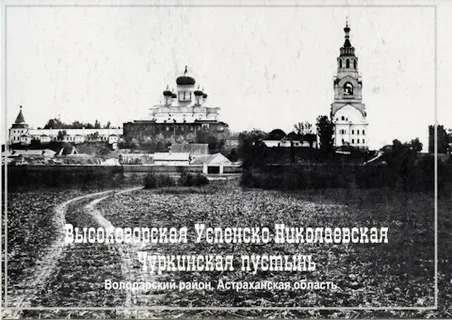

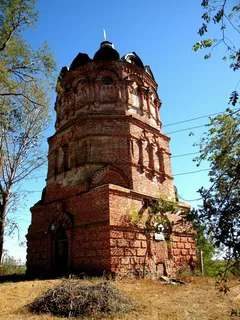


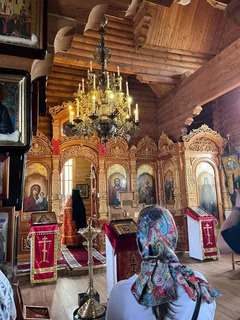
Select an image to open the full-resolution photograph.
The Lower Volga and the beginning of the recorded history
In the sixteenth century, Astrakhan became a region of intensive political, commercial and ecclesiastical development. After the incorporation of the Astrakhan Khanate, the new southern frontier required not only military and administrative consolidation, but a stable church presence across vast distances, river channels and fishing settlements.
The recorded history of the Churkinsky monastery reaches back to 1568, when Churkin Island and its fishing station were granted to Astrakhan’s Trinity Monastery. Its first abbot was Saint Kirill of Astrakhan, a missionary and organiser of cenobitic monastic life in the Lower Volga, who arrived in Astrakhan in 1567 or 1568 on the commission of Tsar Ivan IV.
Under Kirill, churches, cells and a brotherhood were established in Astrakhan. Monastery tradition says that on Churkin Island he erected a chapel, then a wooden Church of Saint Nicholas, and brought the first sacred object of the future hermitage—an icon of Saint Nicholas the Wonderworker, protector of travellers and those who journey by water.
1670–1671: the Razin Rebellion and the martyrdom of Metropolitan Joseph
A century later, the Lower Volga was shaken by the rebellion led by Stepan Razin. Razin’s forces captured Astrakhan in 1670 and established rebel rule. Metropolitan Joseph of Astrakhan openly condemned violence and lawlessness.
In May 1671 he was summoned before the Cossack assembly and tortured in an attempt to force him to admit correspondence with the tsar’s commanders. He betrayed no one and answered with prayer. After the torture he was thrown from the rampart of the Astrakhan Kremlin. His martyrdom became one of the most tragic events in the city’s church history and forms the moral background to the monastery tradition of Churka.
Larka–Churka: a monastery tradition of repentance
Monastery tradition continues the story through a man called Larka, remembered as one of Joseph’s tormentors. It says that soon after the execution he became gravely ill, understood his suffering as a call to repentance, and at the metropolitan’s tomb vowed to spend the rest of his life away from people in fasting and prayer.
Larka travelled into the lower Volga and dug a cell in the high hill near the Churkin fishing station. He became known as Churka—possibly after the wooden “churka,” or log, associated with the saint’s torture. After the cave-dweller’s death, other ascetics are said to have created underground cells and passages nearby.
For the monastery, the importance of this account lies not in sensational detail but in its spiritual meaning: even a life darkened by grave sin may be turned through repentance toward prayer and transformation.
From a dependent settlement to an independent hermitage
During the seventeenth century, the territory was associated with Astrakhan’s Transfiguration Monastery. Monastic presence gradually became established on the high ground, with Saint Nicholas remaining the principal heavenly patron of the place.
In 1762, under Bishop Methodius, Churkinsky Hermitage became independent. This began its first major period of flourishing: a stone Church of Saint Nicholas and a stone wall with towers were established, while gardens, vineyards, horse breeding and other forms of work sustained life in the remote monastery.
The hermitage was more than a place of private prayer. In the conditions of the Volga delta it became an organised economic and social centre linking fishing communities, pilgrims and residents of the Astrakhan region.
Archimandrite Evgeniy and the renewal of an impoverished monastery
By the early nineteenth century the monastery was experiencing serious difficulties. A decisive new chapter began in 1840, when Archimandrite Evgeniy became abbot. He did not found the ancient hermitage; his historical achievement was to revive it. Evgeniy gathered a brotherhood, restored buildings, reorganised worship and economic life, and returned spiritual authority to the monastery.
The Churkinsky account links his spiritual formation with Kitaev Hermitage, Sarov and the circle of ascetics in which the future Saint Seraphim of Sarov grew. Church tradition identifies Elder Dositheus, who blessed Evgeniy to go to Sarov, with Dosithea—Daria Tyapkina, who lived under a male monastic identity. Historical accounts of this identification remain contradictory, so it is presented here specifically as church tradition.
Under Evgeniy’s successor, Archimandrite Paisiy, the great Dormition Cathedral was built, the monastery economy was strengthened and important fishing grounds were recovered. The hermitage again became a significant centre of monastic and pilgrimage life in the Lower Volga.
Flourishing at the turn of the twentieth century
By the early twentieth century about 150 residents lived at the monastery. Workshops and brick production operated; gardens and vineyards were cultivated; livestock was kept; and fisheries were maintained. Economic stability supported the brotherhood, the buildings and hospitality to pilgrims.
A distinctive part of the monastery’s mission was a floating Church of Saint Nicholas. It travelled along the Volga waterways, allowing people in remote fishing settlements to participate in worship. The Saint John the Baptist skete also developed in the early twentieth century.
This system joined the monastery, the natural landscape and the life of local communities. Churkinsky Hermitage was simultaneously a centre of prayer, a working economic complex and a base for church service throughout an inaccessible delta.
1919 and the 1930s: closure and destruction
After the revolution, the monastic order came under threat. The hermitage was closed in 1919. The brotherhood was dispersed, while property and buildings passed to secular institutions.
During the 1930s the Dormition Cathedral, the bell tower and part of the monastery complex were destroyed. Bricks and construction materials were reused elsewhere. At different times, surviving buildings housed social and medical institutions. A place created over centuries for monastic life was radically transformed.
Yet the memory of the hermitage did not disappear. Historic photographs, accounts of local residents and church tradition preserved the image of the monastery until the return of worship became possible.
Revival from spring 2004
The return of monastic life began in spring 2004. Divine services were celebrated again, a brotherhood began to gather, and work started to adapt surviving structures, restore sacred space and receive pilgrims.
Revival is necessarily gradual. The monastery must sustain daily worship and its remote household while stabilising endangered historic structures, improving access and pilgrim facilities, and researching the lost complex.
According to the monastery’s own testimony, an icon of the Holy Royal Passion-Bearers began streaming myrrh in 2014, and later reports concerned many other icons. Such accounts are presented as monastery testimony and part of contemporary religious life, not as independently verified scientific findings.
The caves and the 2024 survey
Memory of underground cells and passages beneath High Hill survived in monastery accounts for generations. In 2024, a ground-penetrating-radar survey reported fourteen man-made cavities. The largest detected space was provisionally estimated at roughly 78 metres long and up to 10 metres high.
These findings require further professional study. Ground-penetrating radar identifies anomalies and possible geometry, but it does not replace archaeological, engineering and historical investigation. Conclusions about the age, function and condition of each space must therefore remain cautious.
For the monastery, the caves matter not as a tourist sensation but as possible material evidence of an ascetic tradition, the memory of repentance and the centuries-long bond between monastic life and the high Volga hill.
Historical timeline
| Date | Event |
|---|---|
| 1567–1568 | Saint Kirill arrives in Astrakhan; in 1568 Churkin Island and its fishing station are granted to Trinity Monastery. Monastery tradition associates him with a chapel and Church of Saint Nicholas. |
| 1670–1671 | The Razin Rebellion, capture of Astrakhan and martyrdom of Metropolitan Joseph. |
| Seventeenth century | Monastery tradition of Larka–Churka’s repentance and the development of cave cells. |
| 1762 | Churkinsky Hermitage becomes independent and begins its first major period of flourishing. |
| 1840 | Archimandrite Evgeniy becomes abbot, gathers a brotherhood and renews monastic life. |
| 1854–1867 | Period of Archimandrite Paisiy; construction of the Dormition Cathedral and strengthening of the monastery economy. |
| Early twentieth century | About 150 residents, workshops, brick production, gardens, fisheries and a floating Church of Saint Nicholas. |
| 1919 | Closure of the monastery. |
| 1930s | Destruction of the Dormition Cathedral, bell tower and other structures. |
| Spring 2004 | Beginning of the modern revival. |
| 2014 | Beginning of monastery reports concerning myrrh-streaming icons. |
| 2024 | A ground-penetrating-radar survey reports fourteen artificial underground cavities; investigation continues. |
Documentary video archive
The English introduction plays directly on this page. The full Russian-language documentary cycle opens on its official RUTUBE pages.

The monastery’s history — Parts 1–3
The series covers the monastery’s origins, the Churka tradition, Archimandrite Evgeniy, flourishing, destruction and the return of monastic life.

Sacred objects and contemporary testimony
The film presents the monastery’s own testimony concerning its icons. These reports are attributed to the monastery rather than stated as independently verified scientific findings.
Editorial note. The Larka–Churka account is identified as monastery tradition; myrrh-streaming reports are attributed to the monastery; and the radar findings are presented as preliminary results of an ongoing investigation.


You must be logged in to post a comment.